

Message appears in the picker only when a connected app offers a task in this category. Two entries can share a name, as the two Send Survey tasks below do. The icon tells them apart.
Settings
Each task has its own drawer. The shared settings are the recipient, the sender or channel, and the content to send: a template, a form, or a request body. Send Email is a wizard with a progress bar whose final step, Preview your email, shows the rendered email under Summary and every setting under Settings. The tasks that fill the category in a workspace with HireData, Ratecard, and WhatsApp connected:On the canvas
A Message task shows a Task badge, the task name, and what it will send. Send Email renders the template and lists Subject, Recipient, Sender, and Form.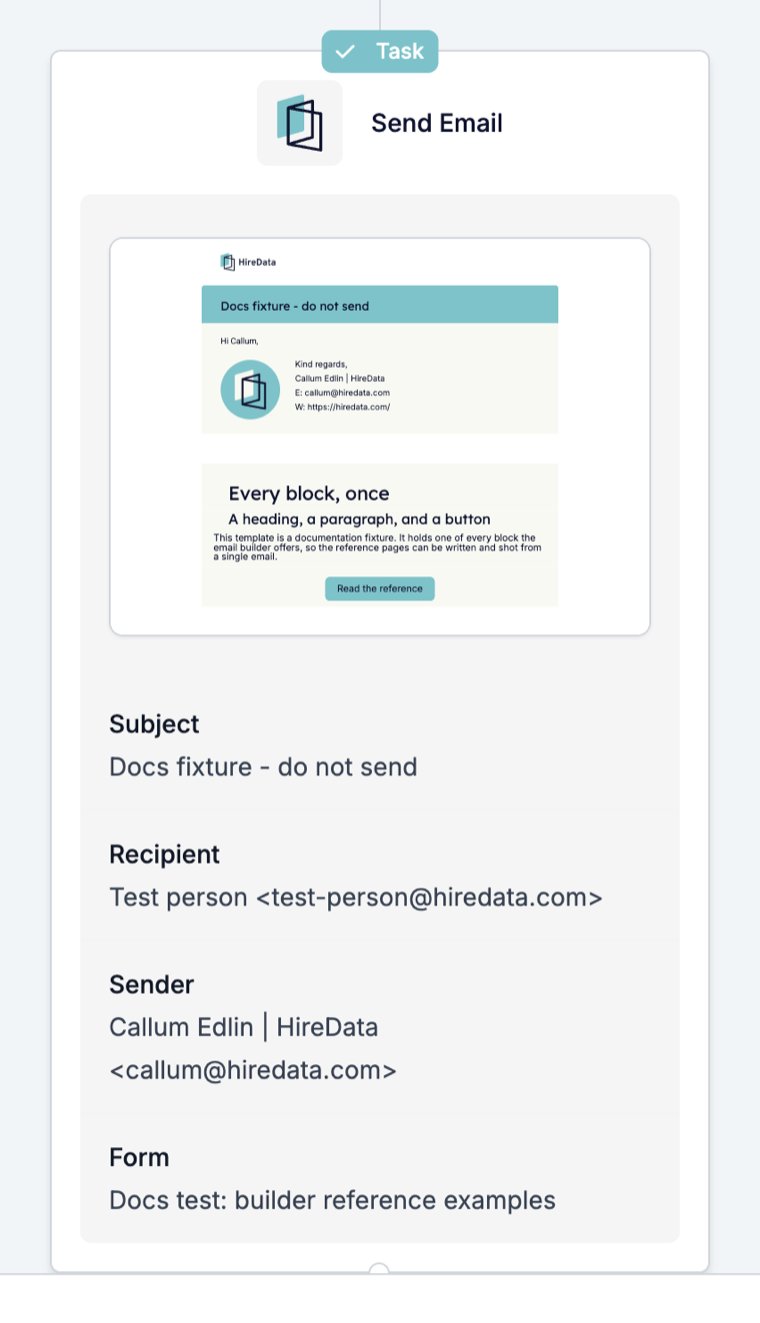
What it outputs
What the channel reports back. A delivered email completes with the message “Email delivered.” A survey outputs the answers once the person replies, which is how a Filter after a WhatsApp survey can branch on an answer. An HTTP Request outputs the response you described. The run step’s Fields tab lists the values the task used, such as the subject, recipient, and sender of an email. A survey holds the run while it waits for the reply: the step shows Waiting and the timeline records “Message Sent” and, when the answer arrives, “Message Received”.What stops the run
A send that the channel refuses. The task card turns red with the line “Cancelled” and the time, and the timeline records the task name with “Cancelled” and the message. In the runs list the Step column names the task, such as “HireData: Send Email”.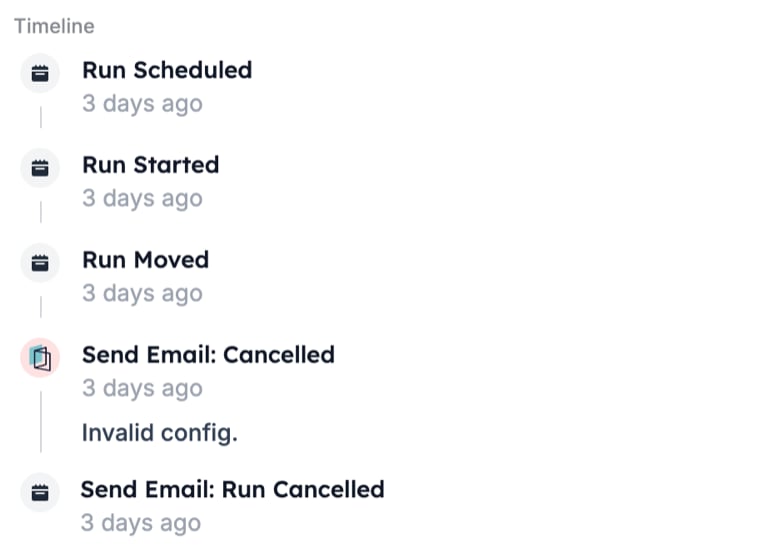
Related
- Automation safety limits explains the limits behind the two send-limit messages.
- Send Email task documents the wizard and the Settings tab, including CC and BCC.
- Task catalogue lists every task per connected app.
- HTTP Request task documents the request, authentication, and response settings.
- Add also lists HTTP Request, because a request can create a record as well as send one.