

dd/mm/yyyy box with a calendar picker beside it. Use it for a start date, a notice period end, or any single day.
It sits in the Temporal group of the Add Content palette.
Settings
Date adds nothing to the settings every field shares. There is no earliest or latest day to set. A date the respondent should not be able to pick has to be caught after the answer arrives, either by an evaluator or by an automation.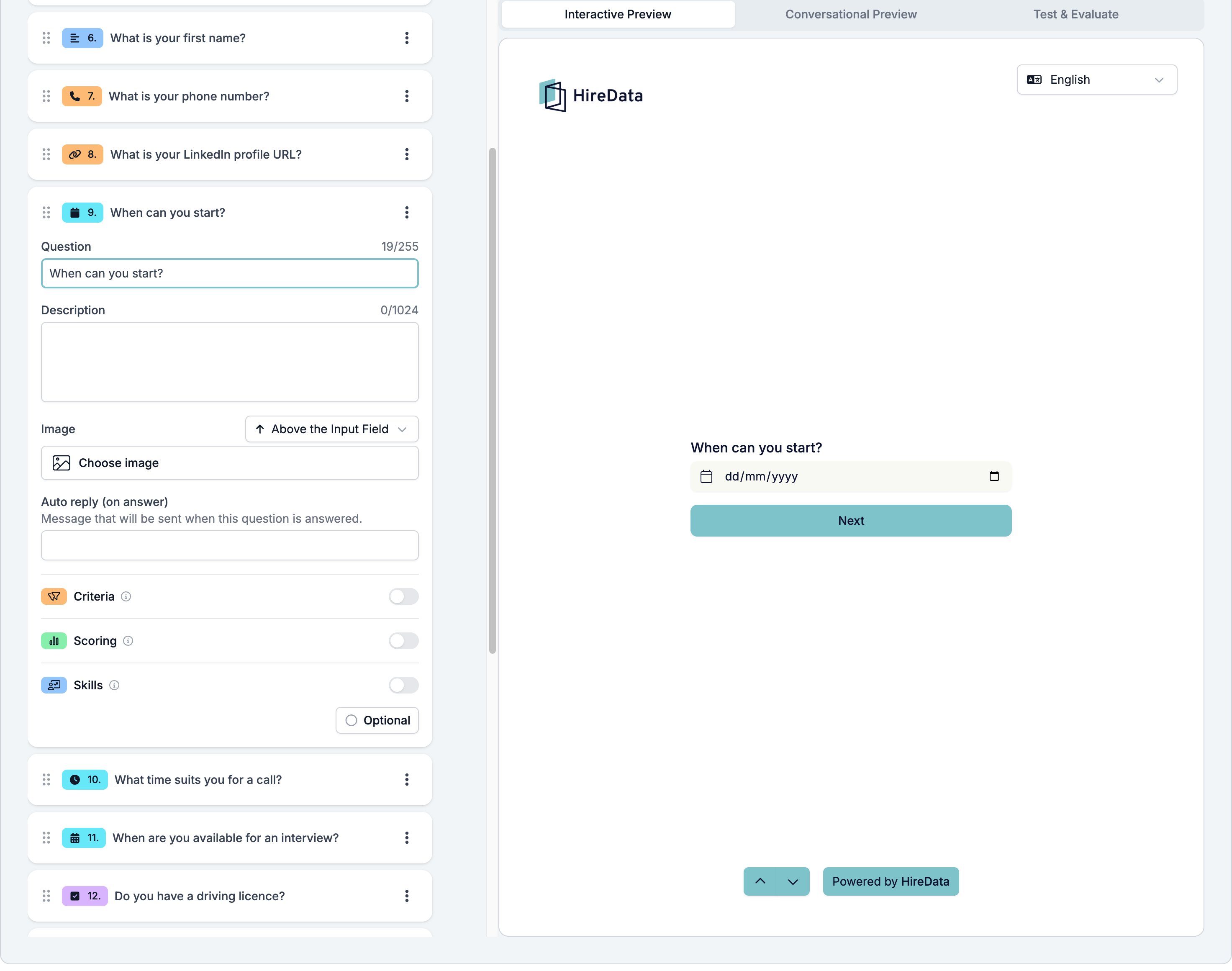
What it stores
A date and time. All three temporal types share one value, and Date fills in the day.Logic operators
The operator picker is fixed at has response and cannot be changed.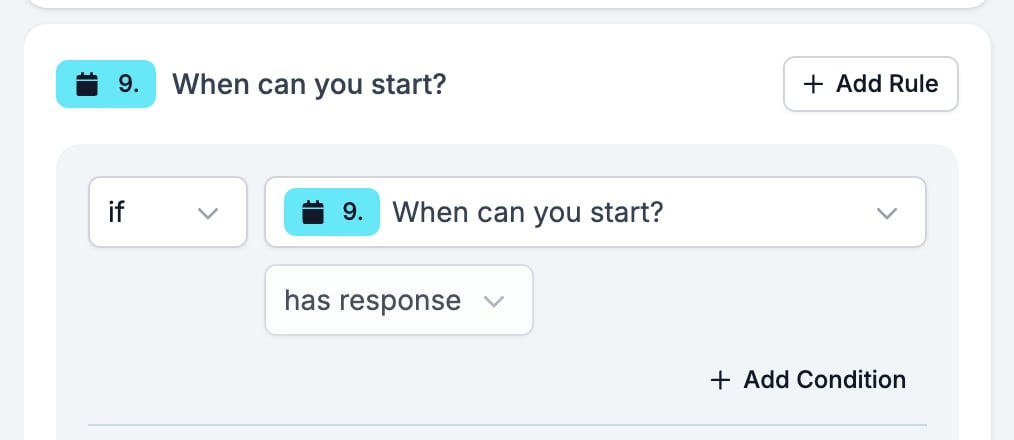
You cannot branch on how early or late a date is. A rule can ask whether the respondent gave a date at all, and nothing more. To act on the day itself, use Criteria or an automation.
Evaluation
Switch Criteria, Scoring, or Skills on for the form in the Evaluation tab and each one gets a switch on this card. A start date is a good Criteria must-have, and it is the way to test a date that logic cannot reach.Related
- Form Builder: Overview covers the builder, the shared settings, and every field type.
- Logic covers the operators, the branching patterns, and what to check when a rule does not fire.
- Time and Datetime are the other two Temporal fields.