

Settings
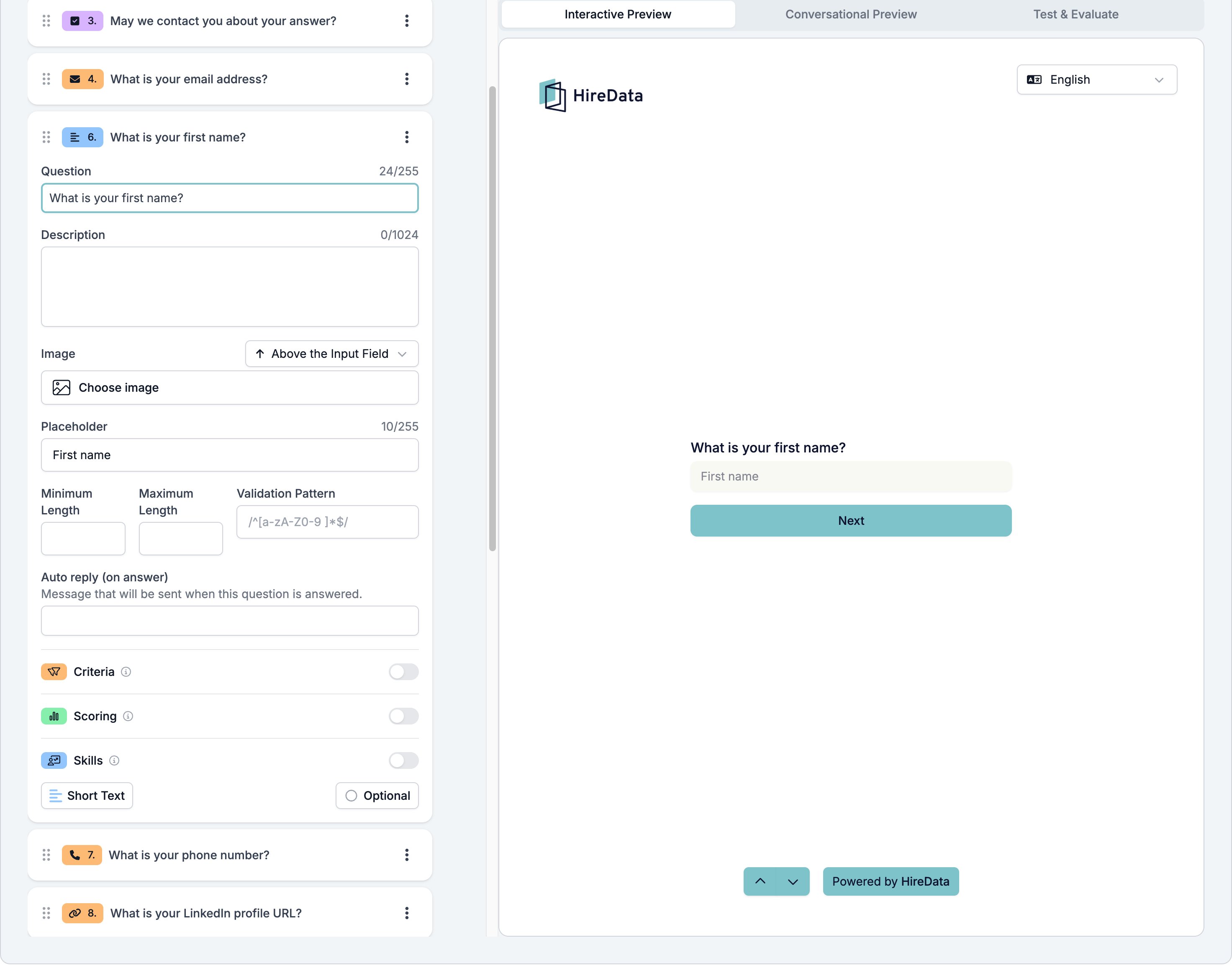
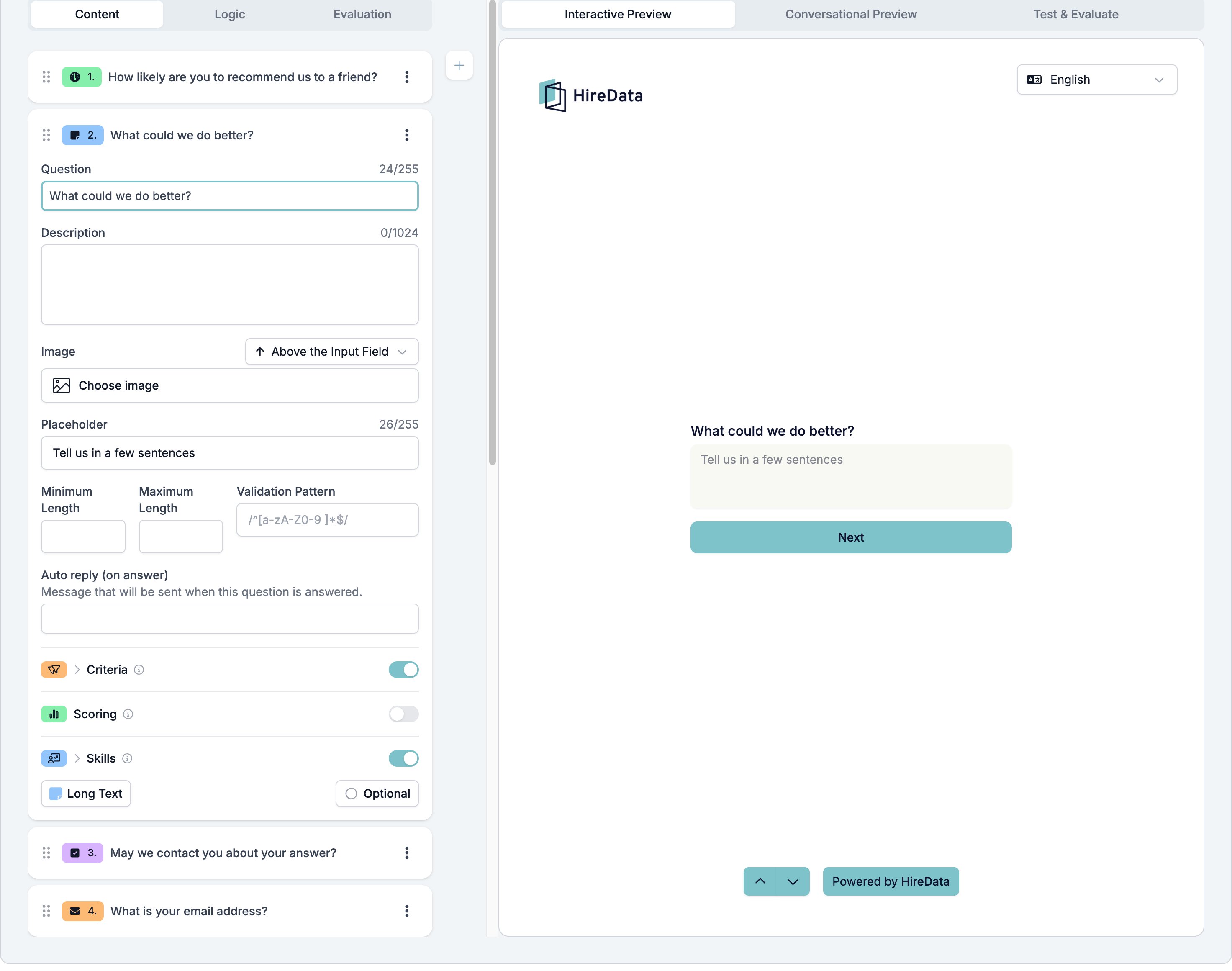
The card carries the settings every field shares. Short Text and Long Text add four of their own.- Placeholder, up to 255 characters, shown in the empty box.
- Minimum Length and Maximum Length, counted in characters.
- Validation Pattern, a regular expression the answer has to match. The box shows
/^[a-zA-Z0-9 ]*$/as an example.
What it stores
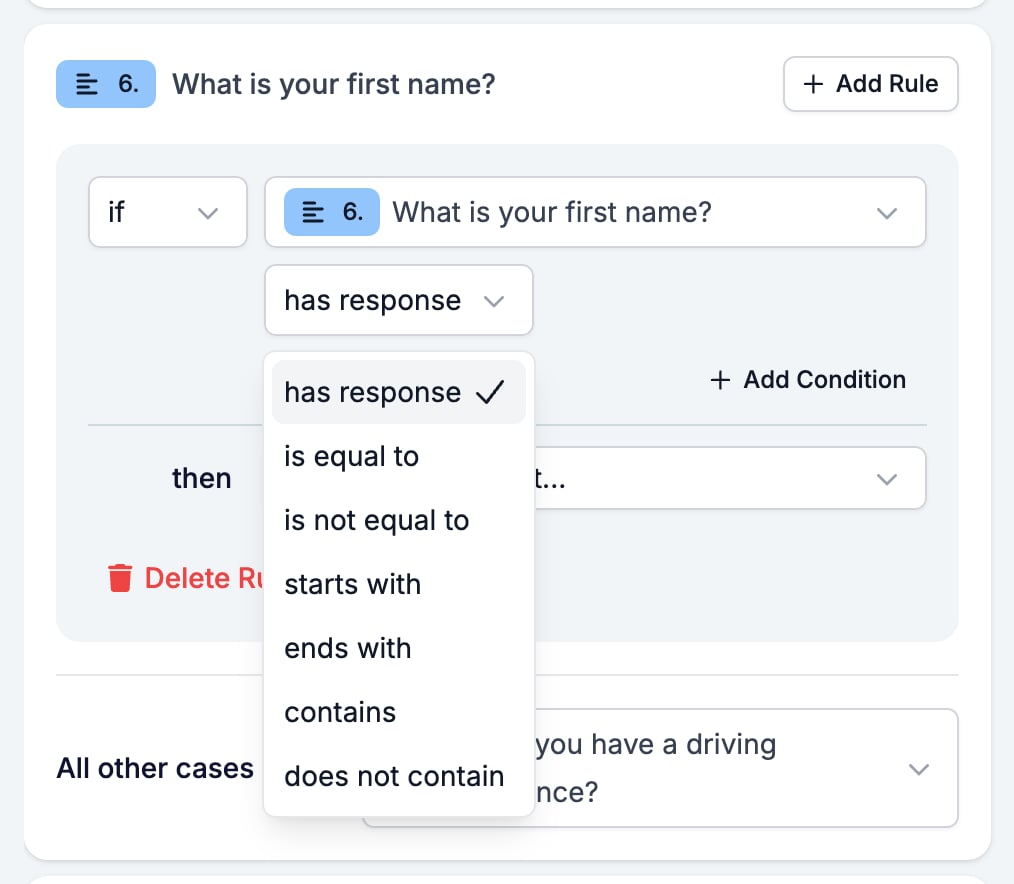
Text, exactly as the respondent typed it.Logic operators
Evaluation
Switch Criteria, Scoring, or Skills on for the form in the Evaluation tab and each one gets a switch on this card. Long Text is the field the AI has the most to work with, because the answer is prose rather than one value. It is the field to point Skills at, and the one where a Criteria check is worth handing to the AI instead of writing a rule.Related
- Form Builder: Overview covers the builder, the shared settings, and every field type.
- Logic covers the operators, the branching patterns, and what to check when a rule does not fire.
- Email, Phone Number, and Website are the same box with a format check on it.
- Creating a form in HireData walks one form from blank to published.